Residential Entry Door Problems: Common Causes and Fixes
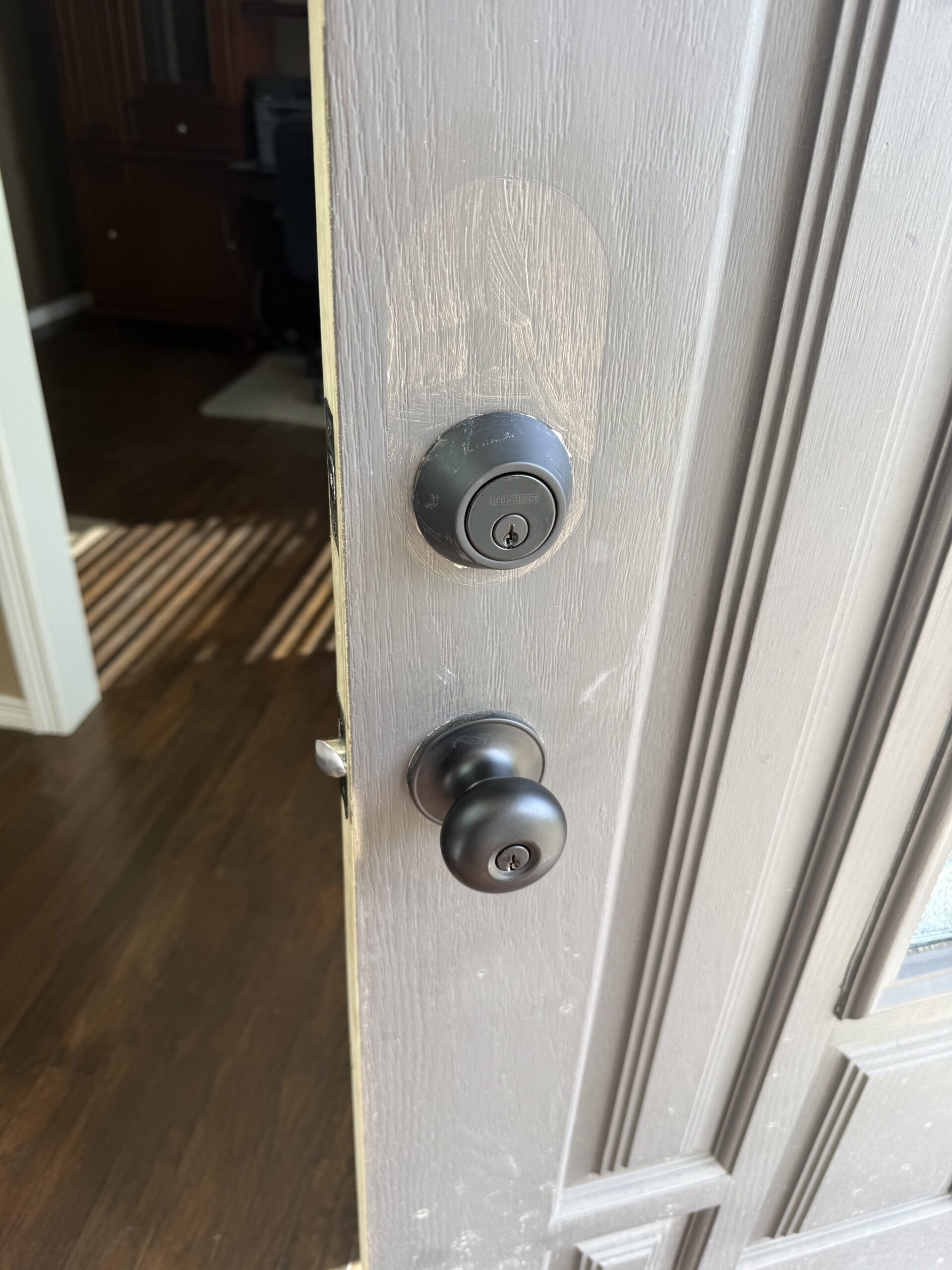
Residential entry door maintenance starts with a simple test: does the deadbolt work smoothly with the door open and closed?
If your deadbolt turns easily while the door is open but sticks when the door is closed, the lock may be fine. The bolt may be hitting the strike plate or the opening in the frame. Door movement, loose hinges, and changes in weather can all affect that alignment.
At Fortress Lock & Safe, we look at how the entire door and lock work together before deciding what needs repair. Here are the common entry door problems homeowners can check and what each one may mean.
Why is my front door deadbolt hard to lock?
Start by opening the door and turning the deadbolt. Does it extend and retract smoothly?
If yes, close the door and try again without forcing it. A deadbolt that binds only when the door is closed usually points to an alignment problem. The bolt may be rubbing against the strike plate, or the door may no longer sit in the frame as it once did.
If the deadbolt is difficult to operate even with the door open, the lock or key may need lubrication or inspection. This simple test helps narrow down the cause.
Make sure the deadbolt extends all the way
A deadbolt can appear to lock even when it does not make its full throw. Sometimes the opening behind the strike plate is not deep enough, so the bolt hits the back of the frame opening before it fully extends. In other cases, the bolt is catching the edge of the strike.
We check the strike plate, the depth of the opening, and the door’s position. The goal is for the deadbolt to extend fully without having to lift, pull, or push the door into place.
Check for loose hinges and door sag
A small amount of door sag can move the latch and deadbolt out of alignment. Loose hinges are one possible cause. You might notice the door rubbing against the frame, an uneven gap around the door, or a lock that works only when you lift the handle.
Adjusting the strike plate alone may not solve the problem if the door is sagging. We look for the source of the movement before making an adjustment.
Weather and foundation movement can change how a door fits
Doors do not always stay in exactly the same position throughout the year. Moisture, freezing weather, and foundation movement can affect how an entry door fits its frame. We have seen doors move during one season and move back closer to their earlier position in another.
If your lock starts binding when the seasons change, check whether the deadbolt still operates smoothly with the door open. That will help you tell a door alignment issue from a problem inside the lock.
Why is my key hard to insert or turn?
If the key sticks or the lock cylinder feels rough, lubrication may help. We recommend lubricating residential locks about every three months, especially locks on doors exposed to strong sunlight throughout the day.
Use a product intended for lock cylinders. We commonly recommend a PTFE lubricant such as Tri-Flow rather than using WD-40 as regular lock maintenance. If lubrication does not improve the lock, the key or the parts inside the cylinder may need inspection.
Sun exposure can also affect how a door fits as temperatures change. If the key turns easily with the door open but the deadbolt binds when it is closed, check the door alignment as well as the lock.
Should you repair or replace the lock?
A hard-to-turn deadbolt does not automatically mean you need a new lock. The fix may be lubrication, a hinge adjustment, more room for the bolt behind the strike plate, or a properly aligned strike.
Replacement makes more sense when the hardware is damaged or too worn to operate reliably. Finding the cause first helps avoid replacing a working lock while the door problem remains.
Residential Entry Door Maintenance Checklist
If your front door has become difficult to lock:
- Turn the key and deadbolt with the door open.
- Try the lock again with the door closed, without forcing it.
- Check whether the deadbolt extends fully.
- Look for door rubbing, loose hinges, or a gap that has changed.
- If the key or cylinder feels rough in both positions, consider whether the lock needs lubrication or inspection.
If you have to force the lock or pull the door into place every time, it is time to address the cause.
Entry door and lock repair in Broken Arrow
Fortress Lock & Safe helps homeowners in Broken Arrow, Tulsa, and surrounding areas with sticking deadbolts, lock repair, and entry door hardware adjustments. If your front door no longer locks smoothly, request service and we’ll determine what needs to be adjusted or repaired.