Lock Maintenance Tips: Keep Your Locks Working Properly
Locks and door hardware are used every day, but they are often ignored until a key stops turning or a door will not latch. Basic lock maintenance can reduce wear, prevent inconvenient failures, and reveal small problems before they damage the lock, key, or door.
These lock maintenance tips can help homeowners and businesses in Broken Arrow, Tulsa, and nearby Oklahoma communities keep their doors operating properly and recognize when professional repair is needed.
Pay Attention to Changes in How the Lock Works
A lock should operate smoothly without excessive force. Changes in the way a key enters, turns, or comes out may be an early warning that the key, cylinder, latch, or door alignment needs attention.
Watch for problems such as:
- A key that is difficult to insert or remove
- A key that must be wiggled to turn
- A deadbolt that does not extend smoothly
- A latch that does not line up with the strike
- A loose knob, lever, deadbolt, or cylinder
- Grinding, scraping, or clicking sounds
- A door that must be pushed, lifted, or pulled to lock
- An electronic lock that responds slowly or inconsistently
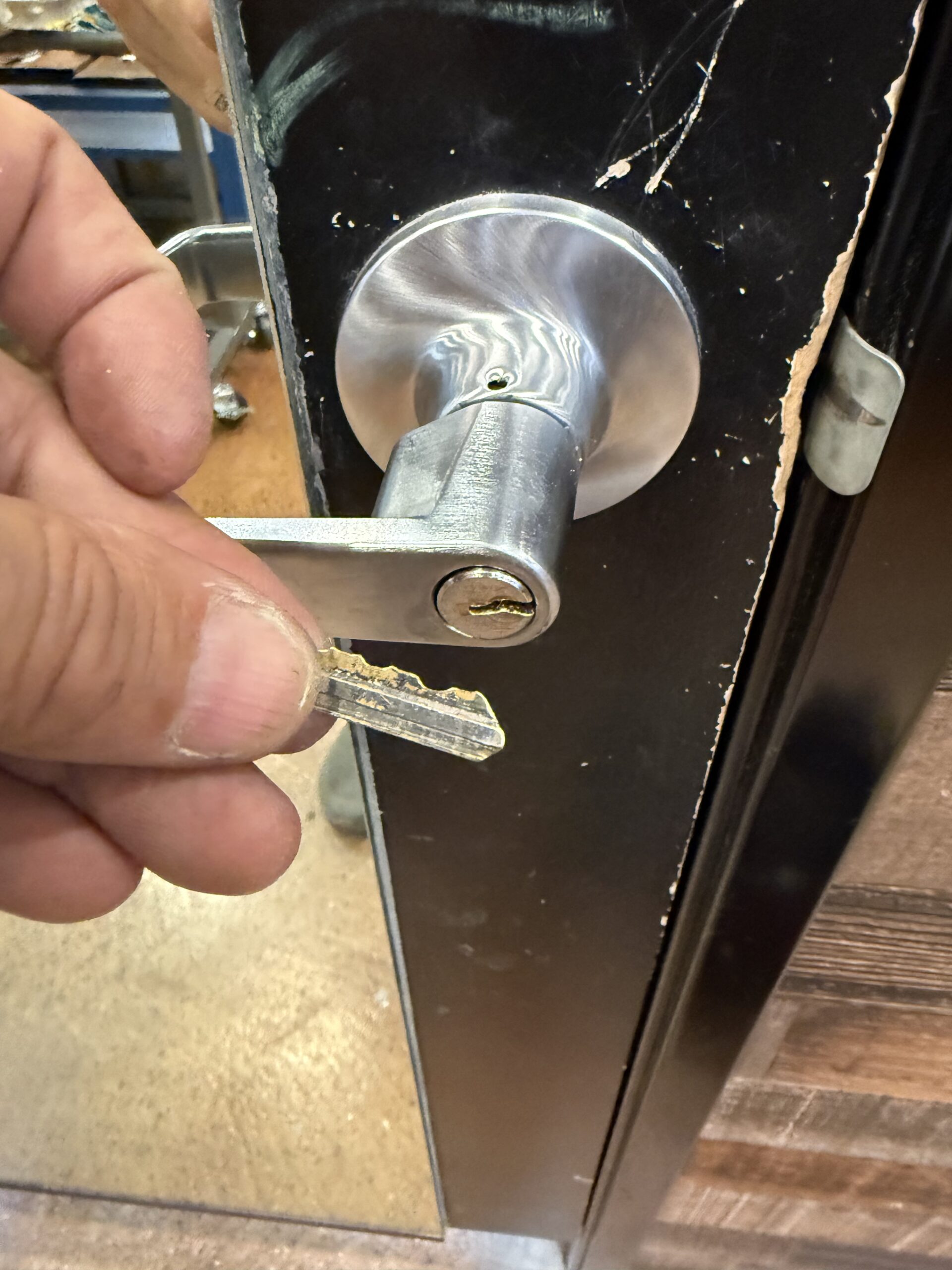
Do not continue forcing a key that will not turn. Keys can bend, crack, or break inside the cylinder, turning a minor problem into a more complicated repair.
Keep the Door Properly Aligned
Many problems blamed on the lock are actually caused by the door or frame. Temperature changes, humidity, foundation movement, loose hinges, worn weather stripping, and repeated use can cause a door to shift.
Test the lock with the door open. If the key and deadbolt operate smoothly when the door is open but become difficult when the door is closed, the problem may involve alignment rather than the cylinder.
The latch and deadbolt should enter their strike openings without scraping or binding. A door that must be lifted or pushed to lock may place unnecessary pressure on the bolt and internal lock components.
Minor alignment problems can sometimes be corrected by tightening loose hinge screws. If the door continues to sag, bind, or rub, the hinges, frame, strike, or door may need professional adjustment.
Tighten Loose Hardware Carefully
Knobs, levers, deadbolts, strike plates, and hinges can loosen through normal use. Check visible screws periodically and tighten them with the correct screwdriver.
Use light, controlled pressure. Overtightening can strip the screw hole, damage the fastener, distort the hardware, or cause the lock to bind.
If screws repeatedly loosen or will no longer tighten, the mounting point may be damaged. Installing a larger screw without inspecting the door can make the problem worse, especially near glass, narrow door stiles, or internal hardware.
Clean Around the Lock and Latch
Dust, dirt, paint, and debris can interfere with moving components. Wipe the outside of the lock with a soft cloth and use a small brush to clean around the latch and bolt.
Avoid soaking the lock with household cleaners. Strong chemicals can damage protective finishes, remove lubrication, or enter electronic components. Apply any cleaner to the cloth rather than spraying it directly onto the hardware.
Paint should not cover the latch, deadbolt, keyway, hinges, or moving parts. If a door is being refinished, protect the hardware or remove it correctly before painting.
Use the Correct Lock Lubricant
A dry or sticky cylinder may benefit from lubrication, but the wrong product can attract dirt or leave a residue that makes the problem worse.
Follow the lock manufacturer’s instructions whenever they are available. If lubrication is permitted, use a product specifically intended for locks, such as an appropriate dry PTFE lock lubricant.
Avoid cooking oil, motor oil, grease, and other household products. Do not mix several lubricants inside the same keyway. Excessive lubricant can collect dust and interfere with the lock’s internal components.
If the lock remains difficult to operate after proper lubrication, stop forcing it. The key may be worn, the cylinder may be damaged, or the door may be out of alignment.
Inspect Keys for Wear and Damage
Keys wear along with the locks they operate. A bent, cracked, twisted, or heavily worn key may stop working or break inside the cylinder.
Inspect frequently used keys and replace damaged copies before they fail. A duplicate made from a badly worn key may reproduce the wear instead of restoring the original key shape.
Do not straighten a severely bent key and continue using it. Metal fatigue can cause the key to break without warning. If every copy of the key is difficult to use, the lock should be inspected instead of making additional duplicates.
Maintain Deadbolts and Strike Plates
A deadbolt should extend fully into the strike without needing to push or pull the door. If the bolt contacts the edge of the strike, continued use may wear the bolt, cylinder, tailpiece, or internal mechanism.
Also check that the strike plate is secure and that its screws are not loose or missing. A loose strike can affect operation and reduce the door’s ability to stay secured.
Do not enlarge the strike opening or grind down the bolt without identifying why the alignment changed. The door may have loose hinges, frame movement, or another problem that should be corrected first.
Check Electronic and Keypad Locks
Electronic locks require the same door alignment as mechanical locks. If a motorized deadbolt must fight against the frame, it may drain batteries quickly or fail to lock completely.
Replace batteries according to the manufacturer’s recommendations and use the specified battery type. Watch for low-battery warnings, slow operation, dim keypads, or repeated error signals.
Keep backup access information in a secure location. Property managers and businesses should also review user codes when employees, vendors, or tenants change.
If the keypad works but the bolt does not move correctly, inspect the door alignment before assuming the electronics have failed.
Do Not Ignore Broken Keys or Damaged Locks
A lock that has been forced, struck, drilled, or exposed to an attempted break-in should be inspected. Exterior damage may indicate internal damage that is not immediately visible.
A broken key should be removed with the proper tools. Pushing objects into the keyway can move the broken piece deeper or damage pins and other internal components.
Replacement may be the better choice when the lock is badly worn, physically damaged, unreliable, or no longer suitable for the door. Rekeying may be appropriate when the hardware still works properly but control of the existing keys has been lost.
Create a Maintenance Schedule for Commercial Properties
Businesses and managed properties often have more doors, more users, and heavier traffic than a typical home. Regular inspections can help identify loose hardware, door-alignment problems, damaged keys, failing closers, and access-control issues before a door stops operating.
High-use entrances, employee doors, storage rooms, common areas, and exterior gates may need more frequent attention. Documenting repairs and key changes also helps owners and property managers maintain better control over the property.
Any fire-rated, egress, panic, or accessibility hardware should be inspected and serviced with the complete door opening in mind. Improper adjustments can interfere with safe operation.
When to Call a Locksmith
Professional service is recommended when:
- A key repeatedly sticks or will not turn
- A key has broken inside the lock
- The deadbolt does not extend or retract fully
- The door must be forced into position to lock
- Hardware is loose, damaged, or pulling away from the door
- The lock was damaged during an attempted break-in
- An electronic lock remains unreliable after replacing its batteries
- Keys are lost, stolen, or not returned
- A lock continues failing after basic cleaning and approved lubrication
Fortress Lock & Safe provides lock and door hardware repair for homes and businesses in Broken Arrow, Tulsa, and nearby Oklahoma communities. With 25 years of experience, we inspect the complete door opening to identify the cause of the problem and recommend the appropriate repair, rekeying, or replacement option.
If your lock is sticking, loose, damaged, or becoming difficult to operate, contact Fortress Lock & Safe before it fails completely.