Commercial Door Closer Repair: 7 Signs You Need Service
Commercial door closer repair should not be delayed when a door begins slamming, closing too slowly, or failing to latch. A properly working door closer helps control the door, protect the frame and surrounding hardware, and keep the entrance secure.
For businesses in Broken Arrow, Tulsa, and surrounding Oklahoma communities, recognizing the early signs of a failing door closer can help prevent additional damage and unexpected door problems. Here are seven warning signs that your commercial door closer needs professional attention.
1. The Door Slams Shut
A commercial door should close smoothly and at a controlled speed. If it suddenly begins slamming, the closer may have lost hydraulic fluid, developed an internal problem, or been adjusted incorrectly.
A slamming door can damage the frame, lock, hinges, glass, and other door hardware. It can also create a safety concern for employees, customers, and visitors. The problem should be inspected before the repeated impact causes more damage.
2. The Door Closes Too Slowly
A door that takes too long to close may leave your business unsecured or allow outside air, dust, and moisture into the building. In some cases, the closer simply needs a professional adjustment. In others, internal wear or changing weather conditions may be affecting its performance.
The door should close at a controlled speed while still latching completely. Adjusting one part of the closer without understanding the entire system can create a different problem, so it is best to have the hardware inspected.
3. The Door Does Not Latch Completely
If the door reaches the frame but does not latch, the closer may not have enough force during the final portion of the closing cycle. However, the closer is not always the only cause.
Hinge wear, door misalignment, a damaged strike, weatherstripping, or problems with the lock can also prevent proper latching. A locksmith can inspect the complete opening and identify whether the closer, lock, hinges, or alignment needs attention.
A door that does not latch reliably can leave a business unsecured even when the lock itself is working correctly.
4. You See Oil or Fluid Around the Closer
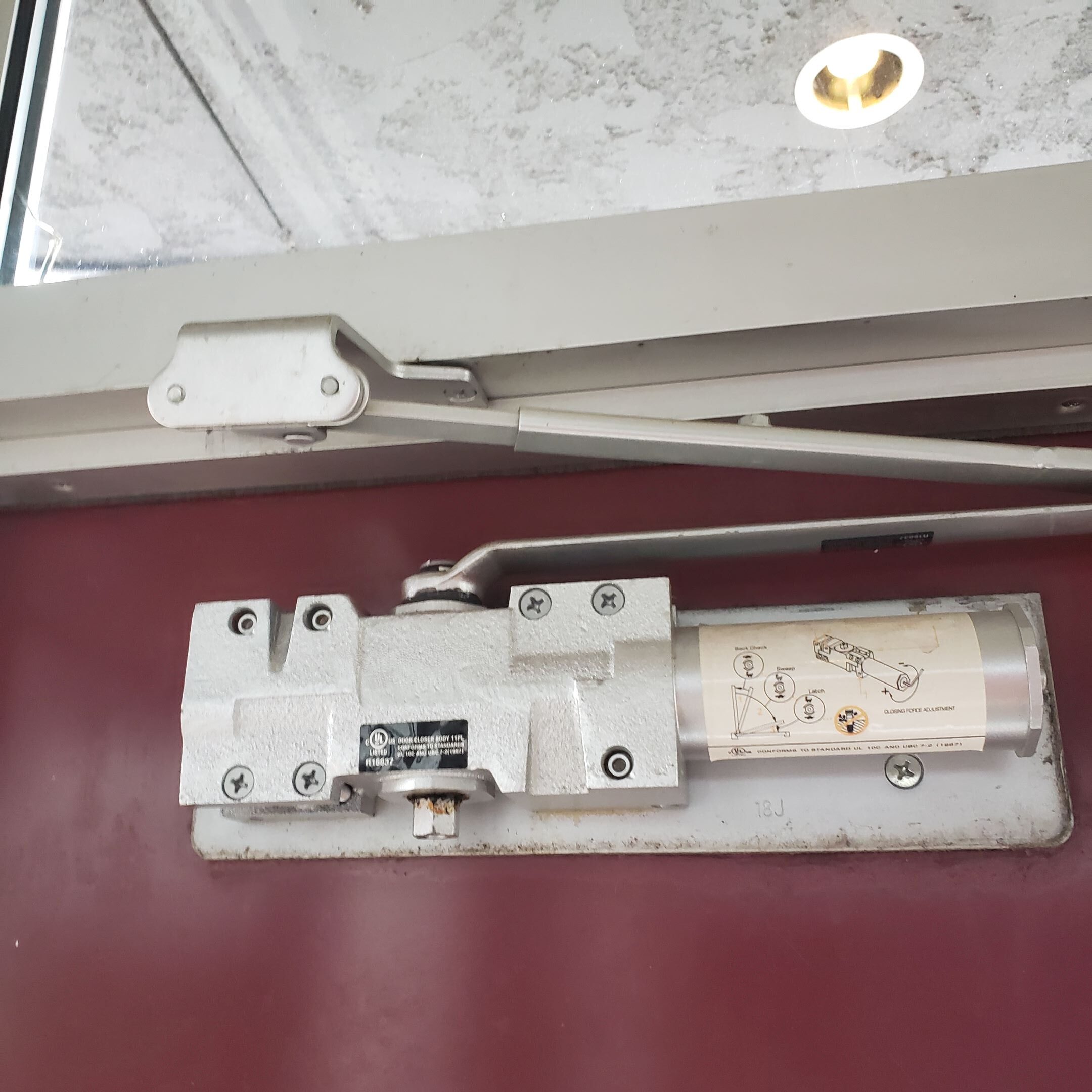
Commercial door closers use hydraulic fluid to control the door’s movement. Oil around the closer body, arm, door, or frame may indicate that a seal has failed.
Once a closer begins leaking, adjustment alone may not provide a dependable repair. The closer may need to be replaced with hardware that is properly sized for the door’s weight, width, location, and frequency of use.
Wiping away the oil may temporarily hide the evidence, but it will not correct the internal failure.
5. The Closer or Arm Is Loose
Loose mounting screws, a shifting closer body, or an arm pulling away from the door or frame should be addressed quickly. Continued movement can enlarge the mounting holes and damage the door or frame.
This problem is especially important on high-traffic commercial entrances. A loose closer can eventually separate from its mounting surface, making the repair more complicated and expensive.
The mounting condition should be inspected along with the door alignment and closer operation before the hardware is tightened or replaced.
6. The Door Jerks, Sticks, or Makes Unusual Noises
A properly functioning door closer should move smoothly. Jerking, binding, popping, grinding, or squeaking can indicate worn components, a bent arm, loose hardware, hinge problems, or door misalignment.
The source of the noise may not be inside the closer itself. Commercial doors operate as complete systems, and trouble with one component can place additional stress on the others.
A complete inspection helps determine the actual cause instead of replacing parts unnecessarily.
7. The Door Is Difficult to Open
A door that suddenly becomes difficult to open may have an incorrectly adjusted closer, a damaged closer arm, binding hinges, or an alignment problem. Excessive resistance can make the entrance inconvenient and may create accessibility concerns.
Commercial door hardware should be adjusted carefully. Turning adjustment valves too far can damage the closer or cause hydraulic fluid to leak. A professional can check the closer settings while also examining the hinges, frame, and other hardware.
Does the Door Closer Need Repair or Replacement?
Not every door closer problem requires replacement. Loose fasteners, minor alignment issues, and certain closing-speed problems may be repairable. Replacement is often the better choice when the closer is leaking, physically damaged, badly worn, incorrectly sized, or no longer operating consistently.
The condition of the entire door opening should be considered before making that decision. Installing a new closer without correcting loose hinges, frame damage, or door misalignment may cause the new hardware to fail prematurely.
Why Proper Door Closer Service Matters
A commercial door closer affects more than convenience. It helps the door close and latch, reduces impact on the frame and hardware, and controls movement through busy entrances.
Some commercial openings also have specific fire, egress, or accessibility requirements. Those doors should be inspected and serviced with the complete opening in mind. Improper adjustments can prevent the door from operating as intended.
Commercial Door Closer Repair in Broken Arrow and Tulsa
Fortress Lock & Safe provides commercial door closer repair, adjustment, and replacement for businesses in Broken Arrow, Tulsa, and nearby Oklahoma communities. With 25 years of experience, we inspect the complete door opening to identify the cause of the problem and recommend the appropriate repair.
If your commercial door is slamming, leaking, difficult to open, or failing to latch, contact Fortress Lock & Safe to schedule professional service.